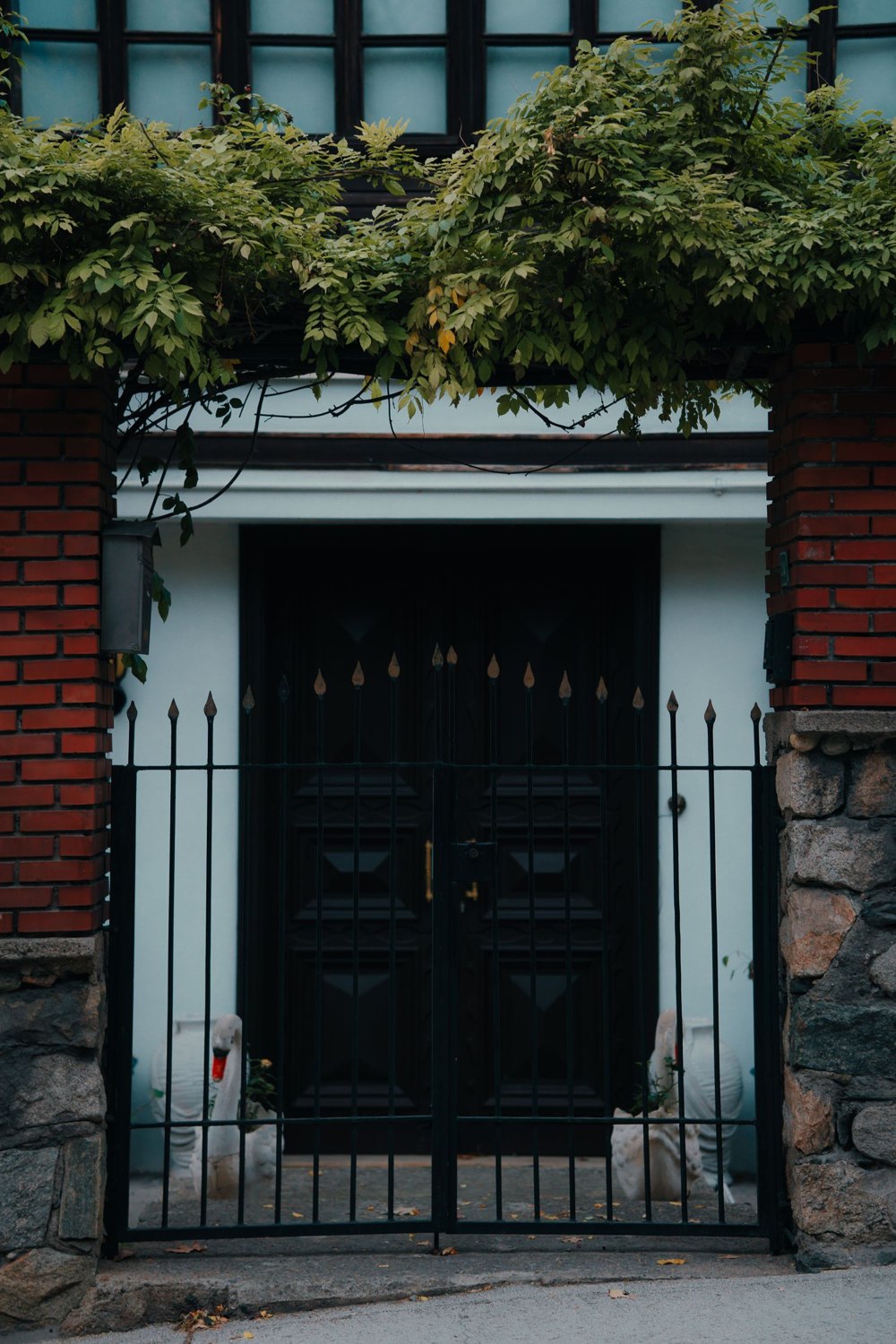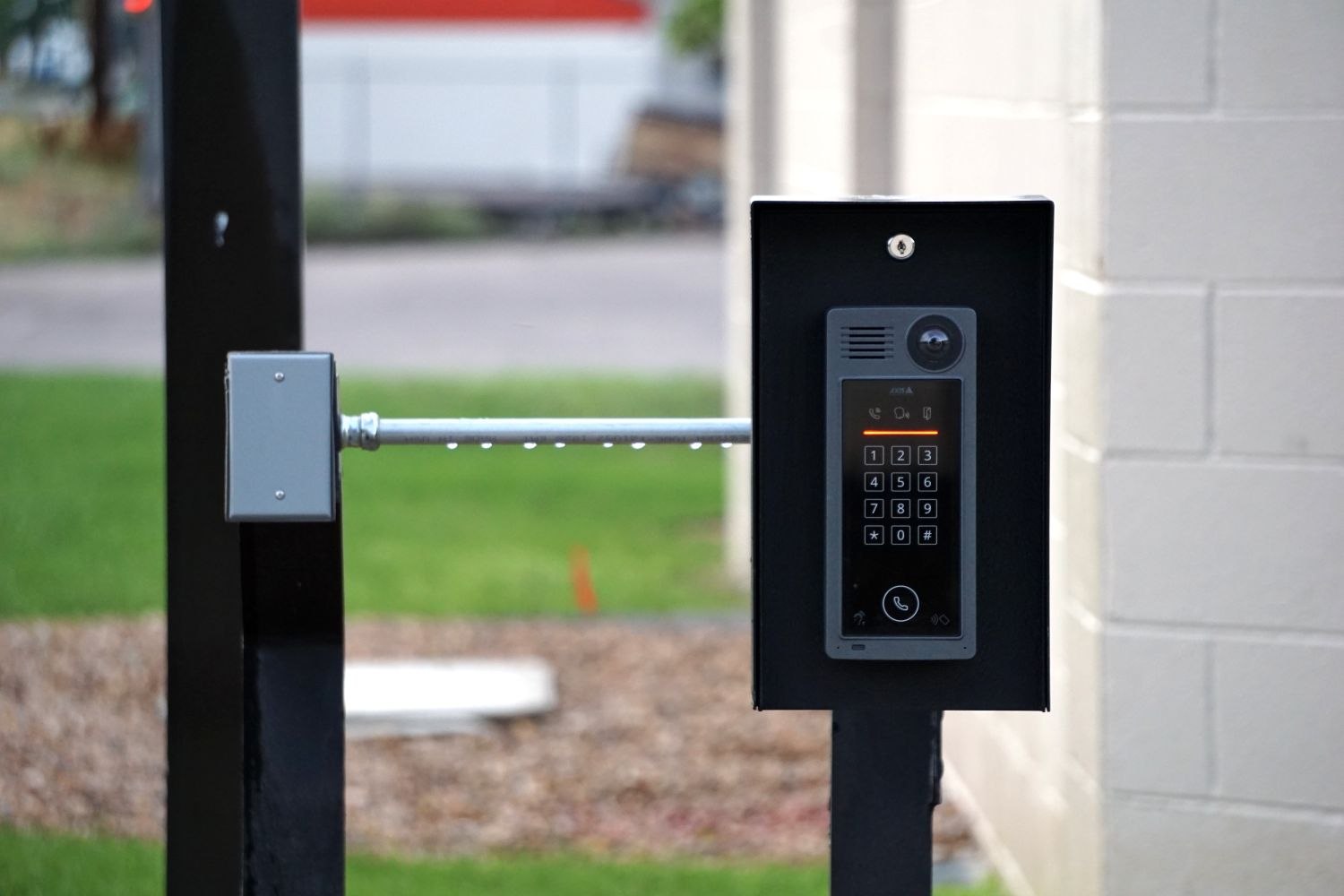
A video intercom facing outward from a shaded porch has a difficult job on a bright afternoon. The background may be beautifully clear while the visitor appears dark. More pixels do not necessarily solve that contrast. Start with the position and lighting, then consider the camera's supported exposure features.
Look at the entrance at the times people actually arrive. Morning sun, a bright sidewalk and headlights after dark create different conditions. Stand where a visitor would naturally wait rather than directly in front of the camera. A person may stop beside the call button, below a canopy or close to a wall that changes the light on their face.
Use the manufacturer's recommended mounting options to improve the view where possible. An approved angle accessory can help aim the camera toward the relevant approach, but it cannot remove every lighting problem. Keep the installation within its environmental and mounting requirements instead of adding an improvised hood that blocks the lens or traps moisture.
If the product offers backlight compensation or a wide-dynamic-range setting, read what it does and test the result. Different devices use these terms differently. Avoid assuming that the highest setting is best in all conditions. Review a normal call and a saved event if recording is part of the supported service.
Check the image with the entrance's usual lighting switched on after dark. A nearby lamp can create glare or reflections, while too little light can remove useful detail. Electrical changes should be handled appropriately; the camera problem is not a reason to improvise mains wiring.
An installation also needs a usable conversation and a clear call control. Do not move the unit to a visually favorable spot that leaves visitors unable to reach it or puts them in the path of a moving door. If no single position meets the needs, ask about a different device arrangement.
Keep expectations specific. The aim is a clearer view of a person using the entrance, not guaranteed identification under every condition. Continue to use the household's agreed verification process before granting access. A sharp picture adds information, but it does not replace deciding whether that person is expected.