The camera location may be easy to choose while the cable route is awkward. A straight line on a sketch can cross a doorway, pass through an exposed connector or reach the building at a point where water collects. Plan the complete route before buying a cable merely because its advertised length reaches the camera.
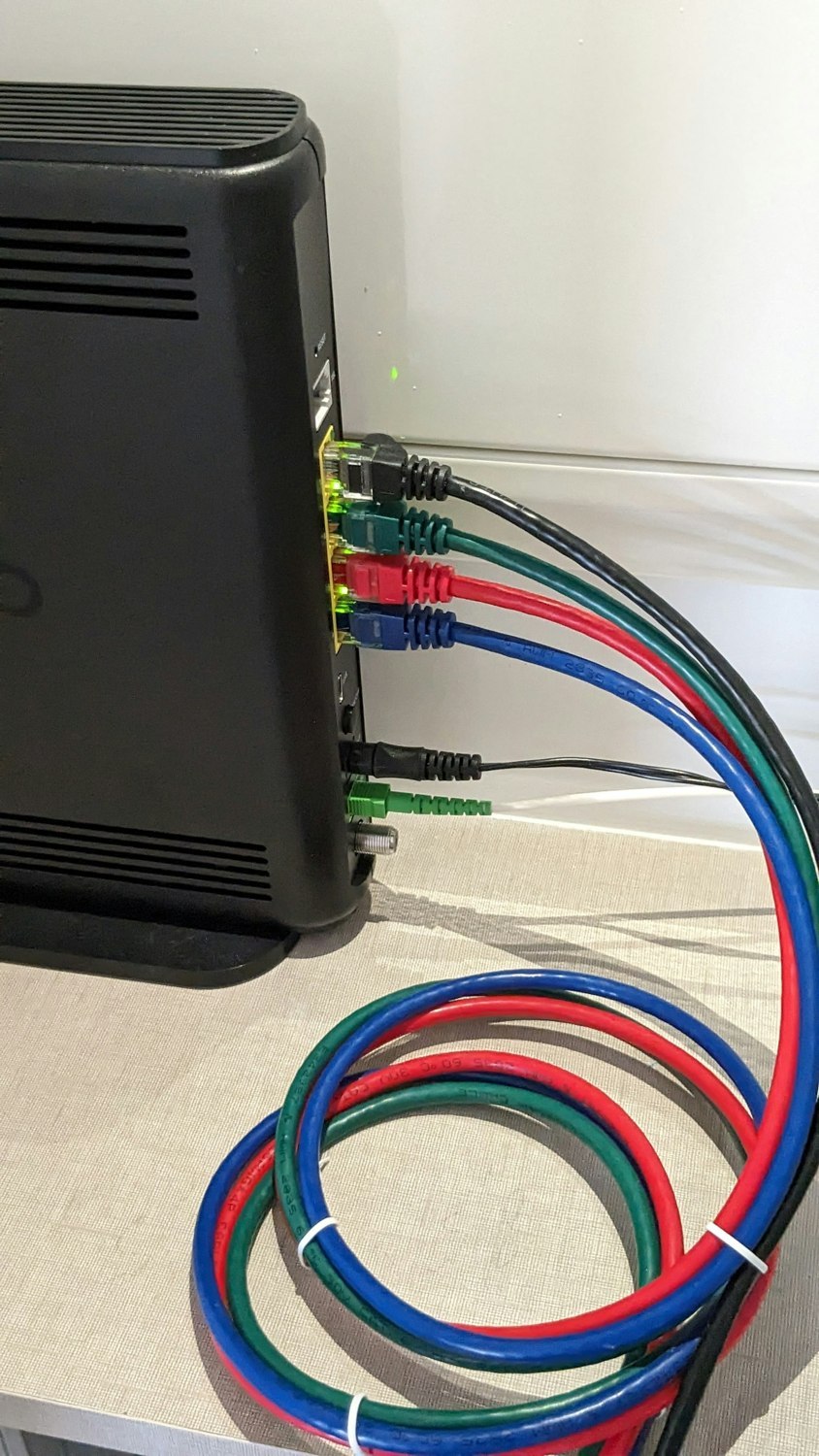
Record where the connection begins, where it travels outdoors and where it enters the building. Include the network equipment and power arrangement. A PoE camera needs a compatible source as well as a data path; a camera with separate power adds another route to consider. Ubiquiti's PoE guidance is useful for identifying power compatibility, but it does not turn an arbitrary exterior cable run into a suitable installation.
Discuss the route with an installer when it involves drilling the building envelope, burial, elevated work or exposure requiring protection. Ask about cable rated for the environment, suitable terminations, strain relief and any grounding or surge provisions the installation requires. Avoid improvising these details from a photograph of somebody else's property.
Make the route serviceable
A connector should not end up dangling where it collects water or bears the cable's weight. Nor should access to a junction require dismantling a finished wall. Ask how the camera can be replaced later without damaging the route or leaving a temporary connection exposed.
Consider ordinary use of the area. A cable that clears a door when it is half open may be pinched when the door closes fully. A gardening tool, moving storage shelf or newly installed gutter can change the situation. Mark the route on the household plan so future work does not treat it as an unknown spare wire.
Before finalizing the installation, verify the camera's actual operation at the far end. Check its live view, saved recording and power behavior using the supported setup. A network indicator proves less than a complete functional check. Have the installer explain what is normal and how to recognize a problem without opening sealed connections.
Keep product details and photographs of accessible finished routing in your private maintenance record. If a storm later damages a bracket or a renovation exposes the cable, the original record can help explain what changed.
A wired connection can be a good answer where Wi-Fi is unreliable, but the benefit comes from a suitable installation. The tidy-looking section beside the camera is only one part of it. The less visible transitions and entry points deserve equal attention because they are the parts most difficult to correct after everything has been fixed in place.